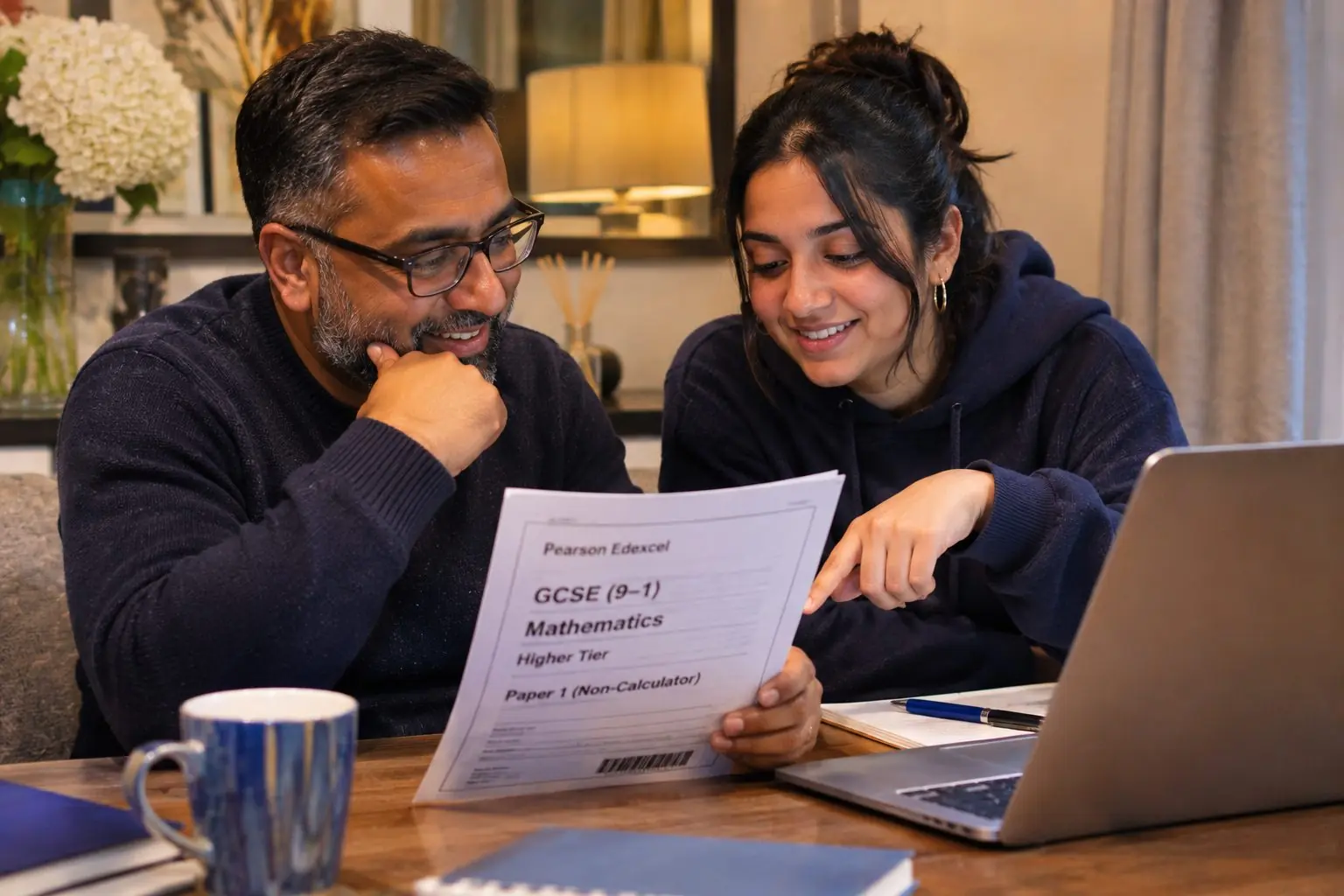
Foundation or Higher tier: which is right for my child?
The tier decision can feel like a big deal. Here's what it actually means.
Mrs Bukky Ekine-OgunlanaHead of Tuition ·
In short: Foundation tier covers grades 1 to 5. Higher tier covers grades 4 to 9, with a grade 3 available as a safety net. The right tier depends on where your child is working now and how secure they are.
The difference
GCSE Maths has two tiers. Foundation papers lead to grades 1 to 5. Higher papers lead to grades 4 to 9, and a student who just misses a 4 on Higher can be awarded a 3. Both tiers cover a lot of the same topics, but Higher includes harder ones and harder questions.
When Foundation makes sense
If your child is working at a grade 3 or 4 and isn't yet secure, Foundation gives them the best chance of a solid 4 or 5. A strong 5 on Foundation is a better result than a 3 on Higher.
A strong 5 on Foundation is a better result than a 3 on Higher.Mrs Bukky
When Higher makes sense
If your child is securely working at a 5 or above, or needs a 6 or more for their next step, Higher is usually right. It's the only way to get above a 5.
How to decide
Ask the school which tier they're planning, and why.
Ask what grade your child is working at now, and how secure it is.
Think about what they need next: a course that asks for a 6 means Higher.
When we teach GCSE Maths, every learner works on the tier that's right for them, and that decision is reviewed as they progress.
Want to know exactly which topics to work on?
Our free check, done by your child online, shows you where the gaps are.
Exam dates, revision tips and what's new in the Study Zone. No spam.
Newsletter
You're signed up
The TCEC Edit arrives once a month.
Cookies on this site
We use essential cookies to run the site. With your OK, we'd also use analytics cookies to see what helps, and advertising cookies to show our adverts to the right families. Cookie policy